MySQL
Installing MySQL 9.7 LTS Community Edition on CentOS
Historically installing MySQL on a RedHat Compatible Linux server was as simple as yum install mysql-server. Today’s MySQL Oracle Linux, Red Hat Enterprise Linux, CentOS, and Fedora 9.7 instructions are not accurate mixing in 8.
Read more
Using GenAI directly in the database. A practical example using MySQL 8.0
If you have a typical MySQL production setup using MySQL 8.0 (EOL) with replication, you can take advantage of VillageSQL extensions to generate AI responses directly with your source data with no impact on your production setup or existing application software.
Read more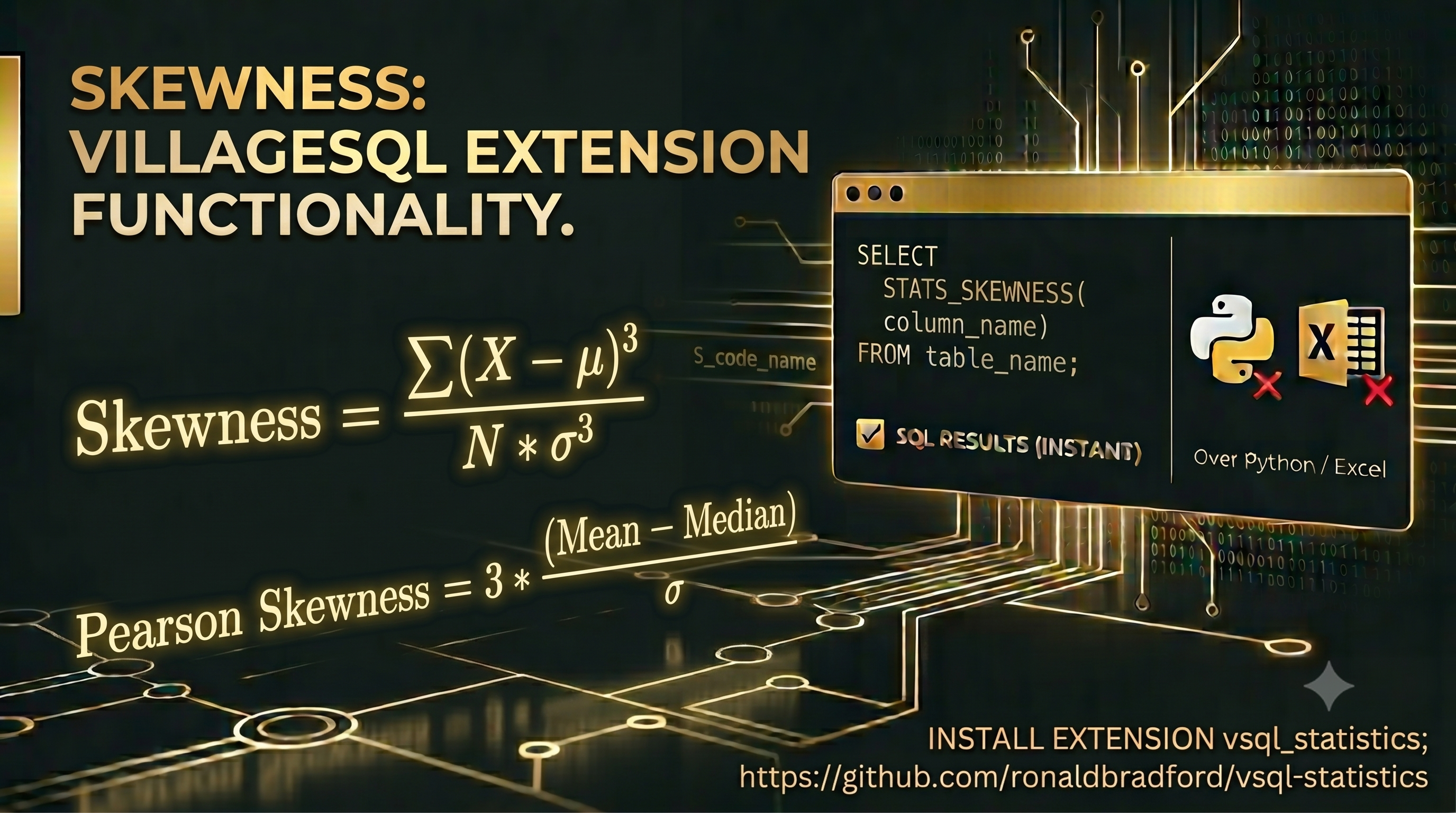
Producing Skewness statistics with SQL
Skewness measures the asymmetry of a distribution. A perfectly symmetric distribution has a skewness of zero. A positive skew (right-skewed) means the tail extends to the right — a small number of high values pull the mean above the median.
Read more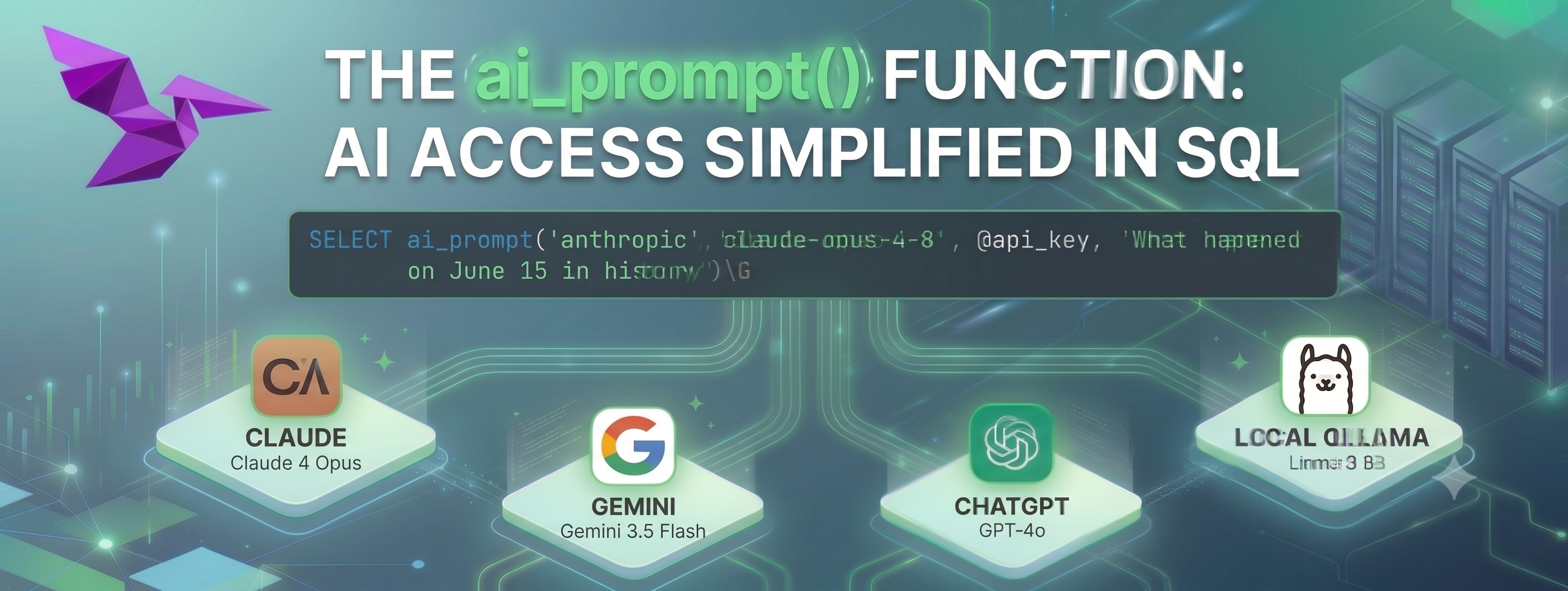
Exploring the vsql-ai extension
The vsql-ai extension adds AI prompt capabilities and text embeddings directly in SQL queries, with support for Anthropic Claude , Google Gemini , OpenAI ChatGPT , or a local LLM such as Ollama .
Read more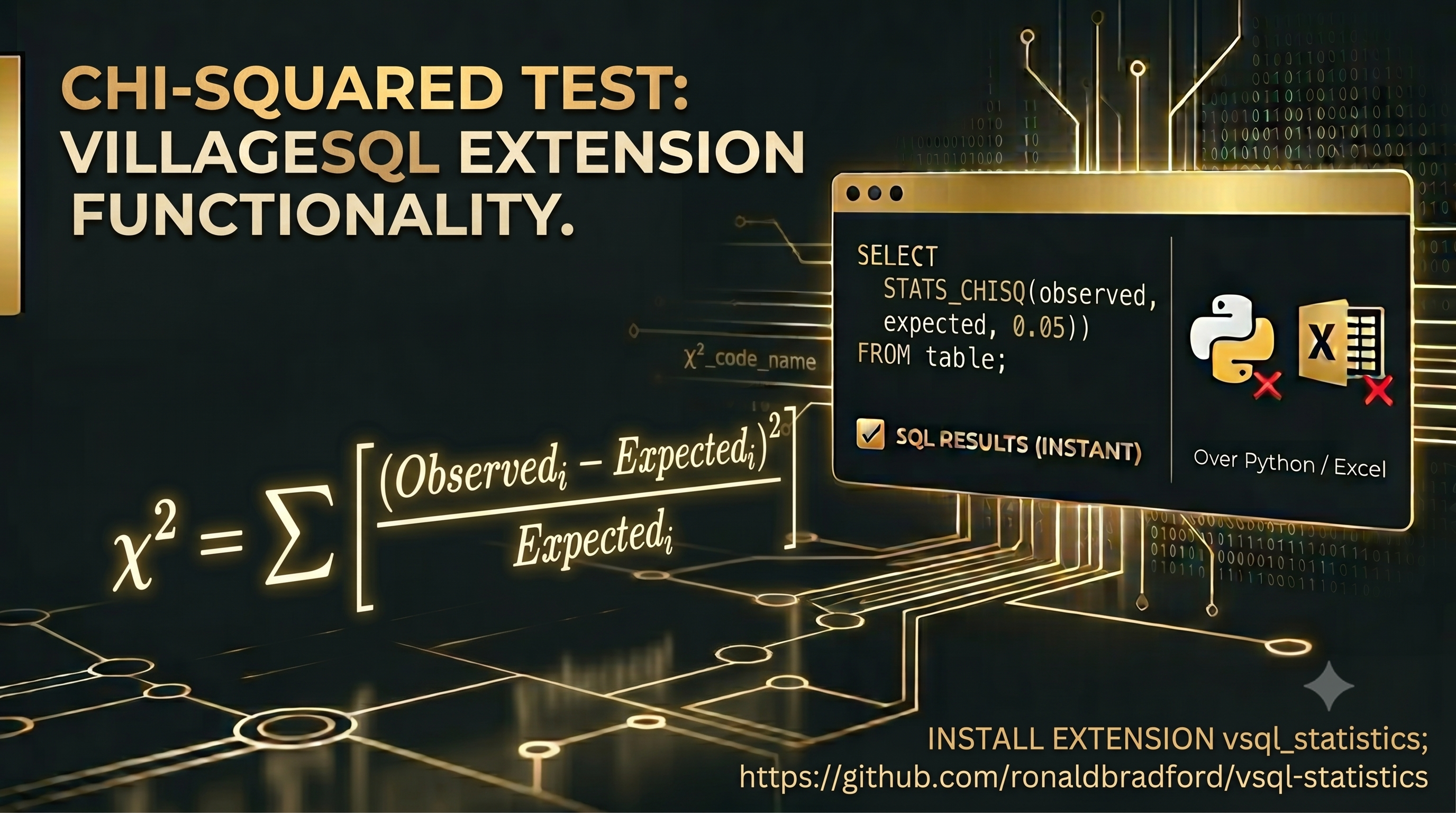
Producing Chi-Squared statistics with SQL
The Chi-Squared test is one of the most widely used statistical tests for categorical data. It comes in two flavors: the goodness-of-fit test asks whether an observed frequency distribution matches an expected one, while the test of independence asks whether two categorical variables are associated with each other.
Read more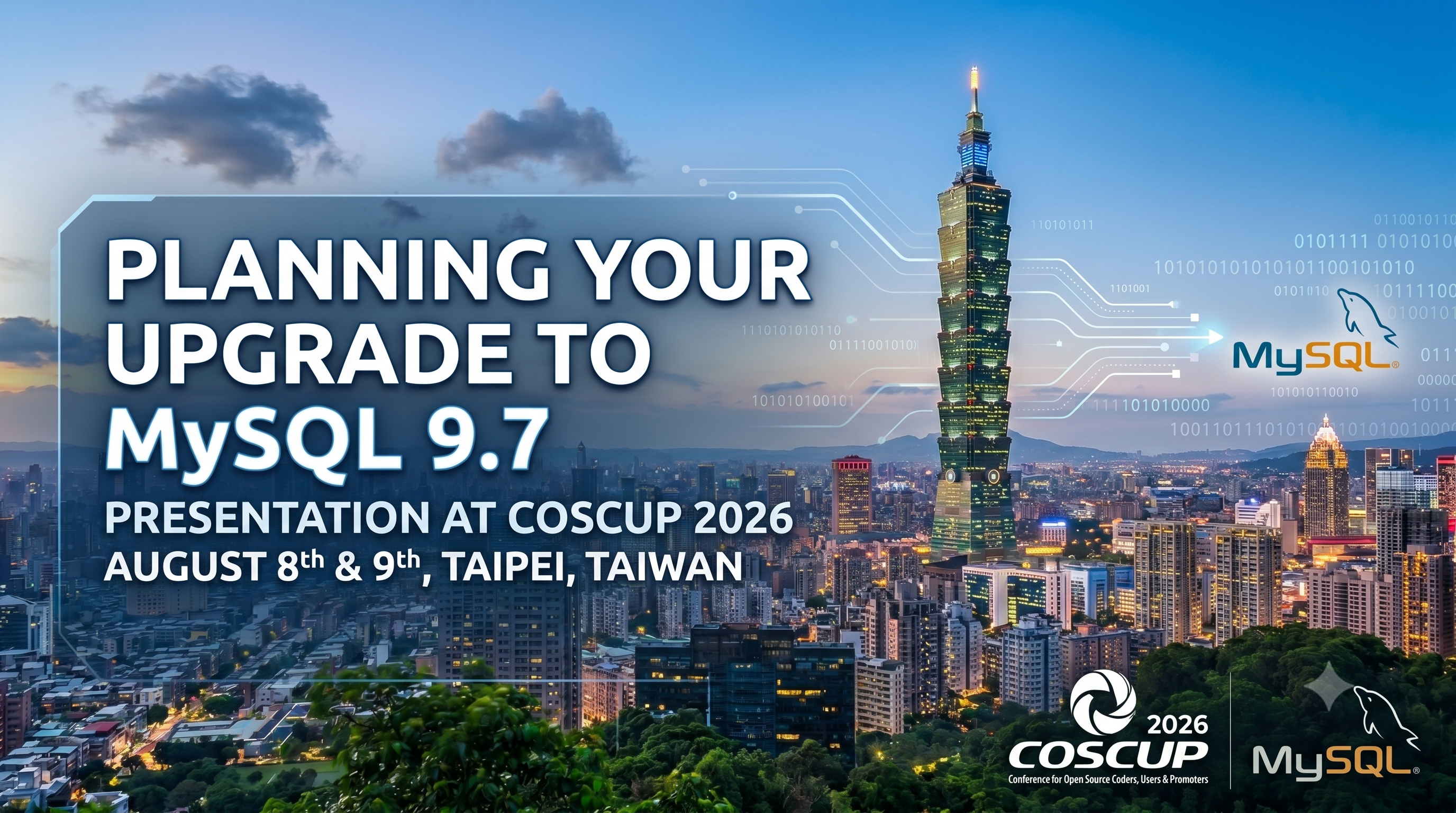
Speaking at COSCUP 2026 — Planning your upgrade to MySQL 9.7
I am excited to be speaking at COSCUP 2026 in Taipei, Taiwan on August 8th and 9th. COSCUP (Conference for Open Source Coders, Users and Promoters) is one of the largest open source conferences in Asia, and it is always a privilege to present to the engaged and technically sharp community there.
Read more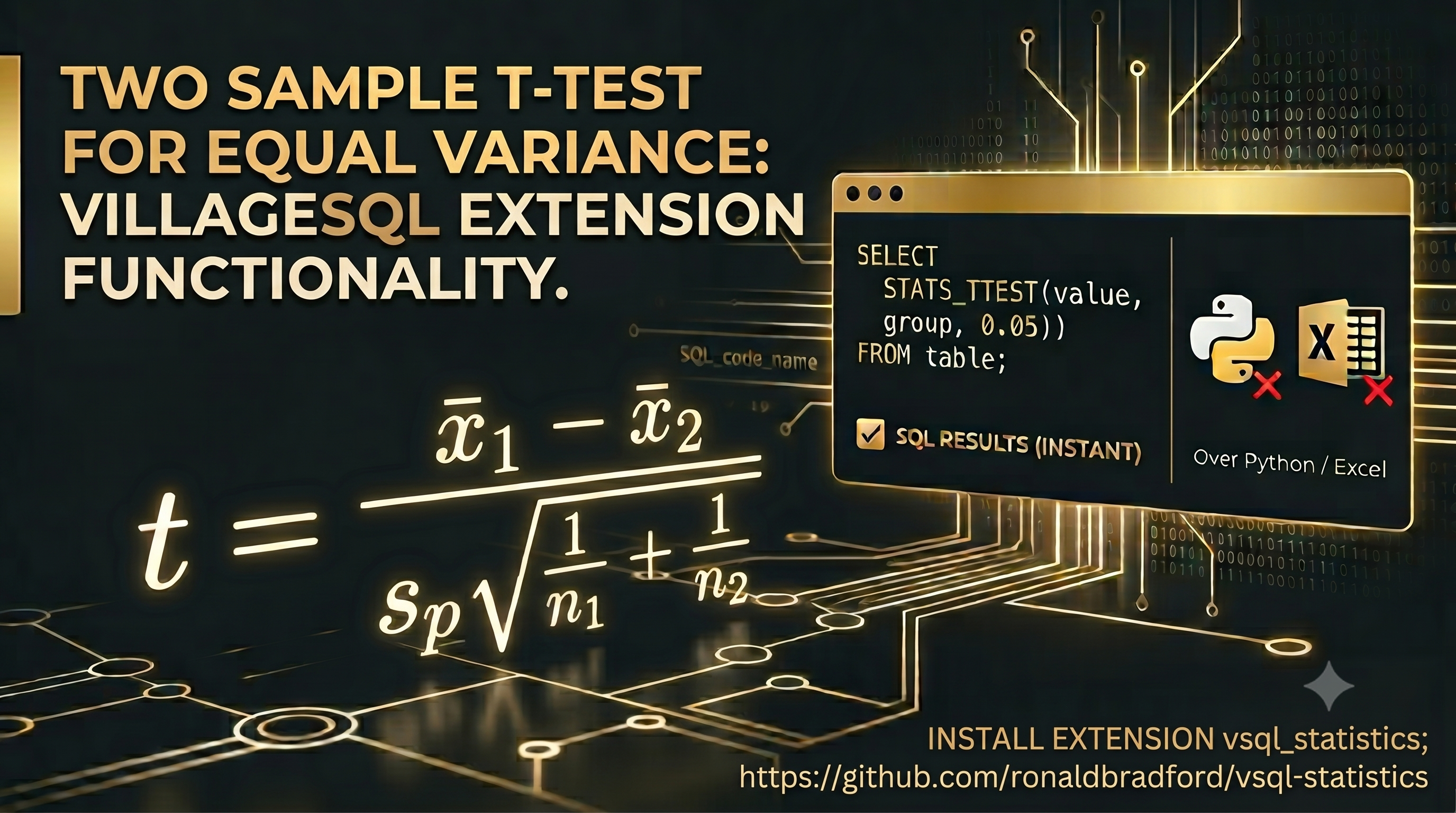
Producing Two Sample T-Test statistics with SQL
The two sample t-test for equal variance is a statistical test to determine if the means of two groups are different enough that the difference is likely caused by some underlying difference, rather than random chance.
Read more
Building your first VillageSQL Extension with AI skills
This is a technical walkthrough of the vsql-extension-builder recently released May 28 at Percona Live Bay Area 2026 and found at https://github.com/villagesql/villagesql-skills . Highlights Install VillageSQL pre-built binary first Install SDK with pre-built binary second Install the skill Run it with your AI tool The output can be found at https://github.
Read more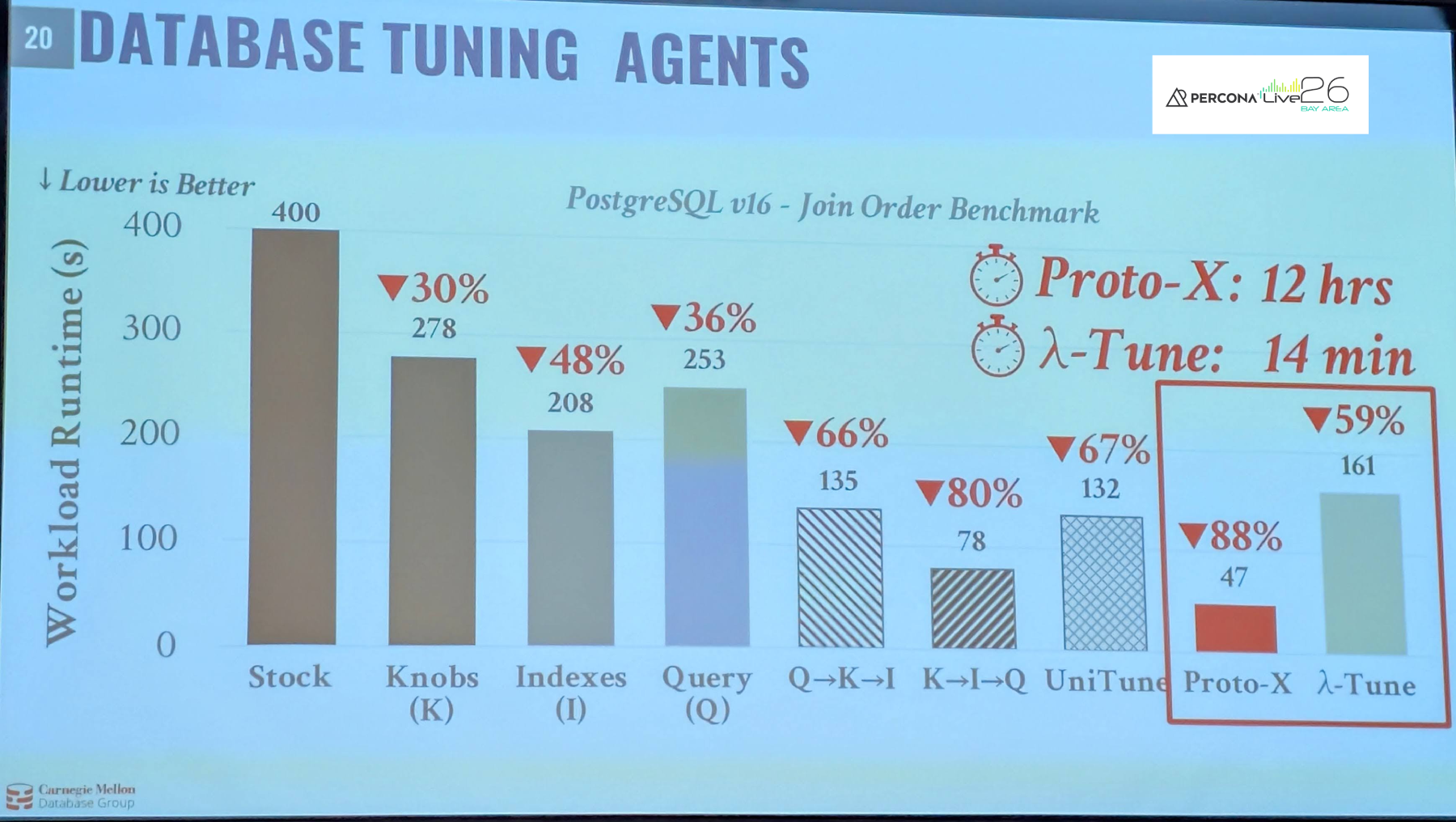
Why using production workloads over simulated workloads is critical
AI-Assisted SQL Tuning Last week in his keynote speech at Percona Live Bay Area 2026 , Andy Pavlo presented Databases: The Final Boss of Agents and provided some useful insights into query optimization of simulated workloads leveraging AI.
Read more
Improving your MySQL Security Posture Presentation
At the MySQL BR Conference 2025 I had the opportunity to speak about Improving Your MySQL Security Posture. You can find a copy of my slides on my Presentations , and a Portugese (Brazil) translation.
Read more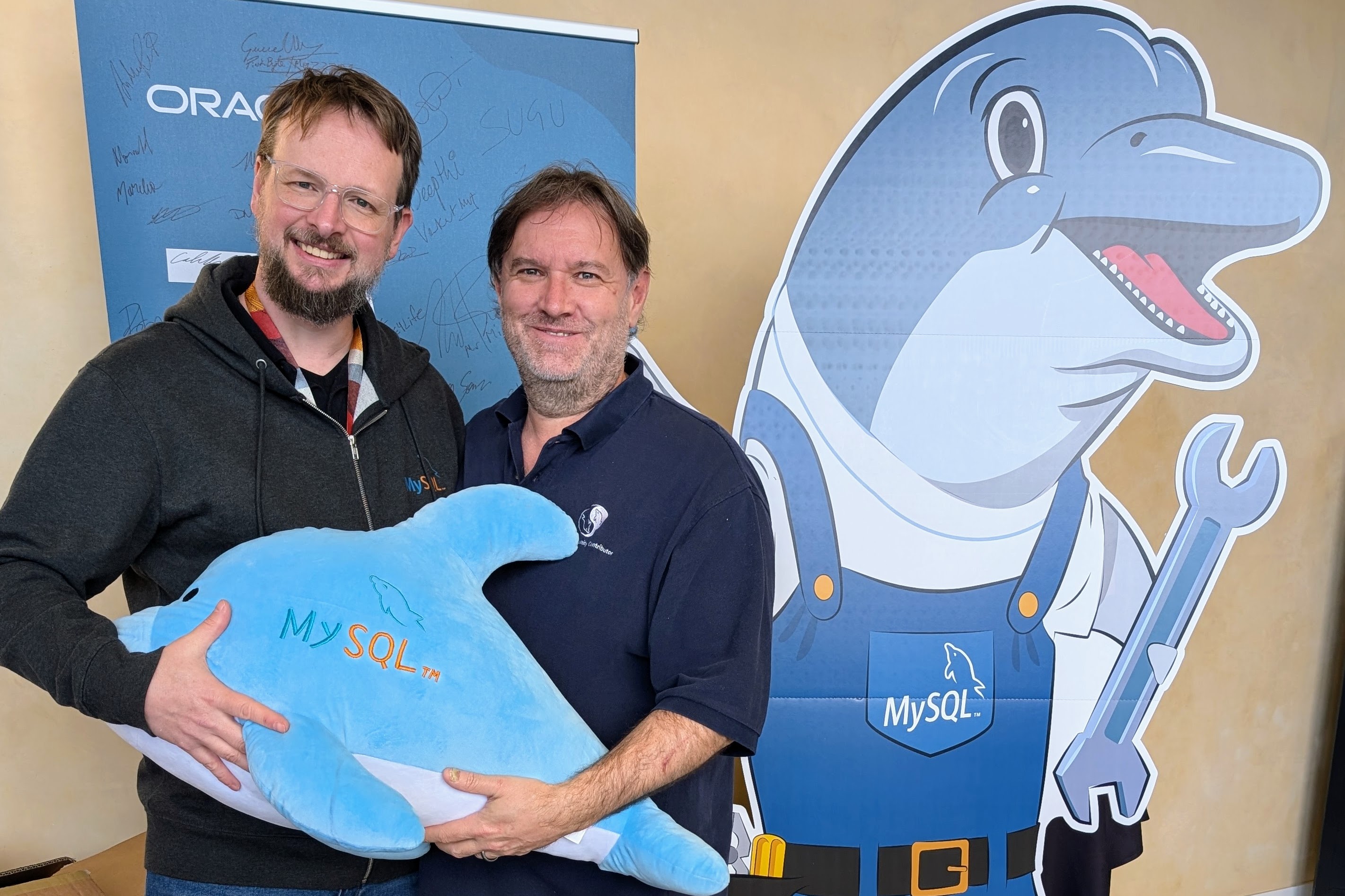
MySQL and Heatwave Summit Presentation
Last week I had the opportunity to speak at the MySQL and Heatwave Summit in San Francisco. I discussed the impact of the new MySQL 8.0 default caching_sha2_password authentication, replacing the mysql_native_password authentication that was the default for approximately 20 of the 30 years that MySQL has existed.
Read more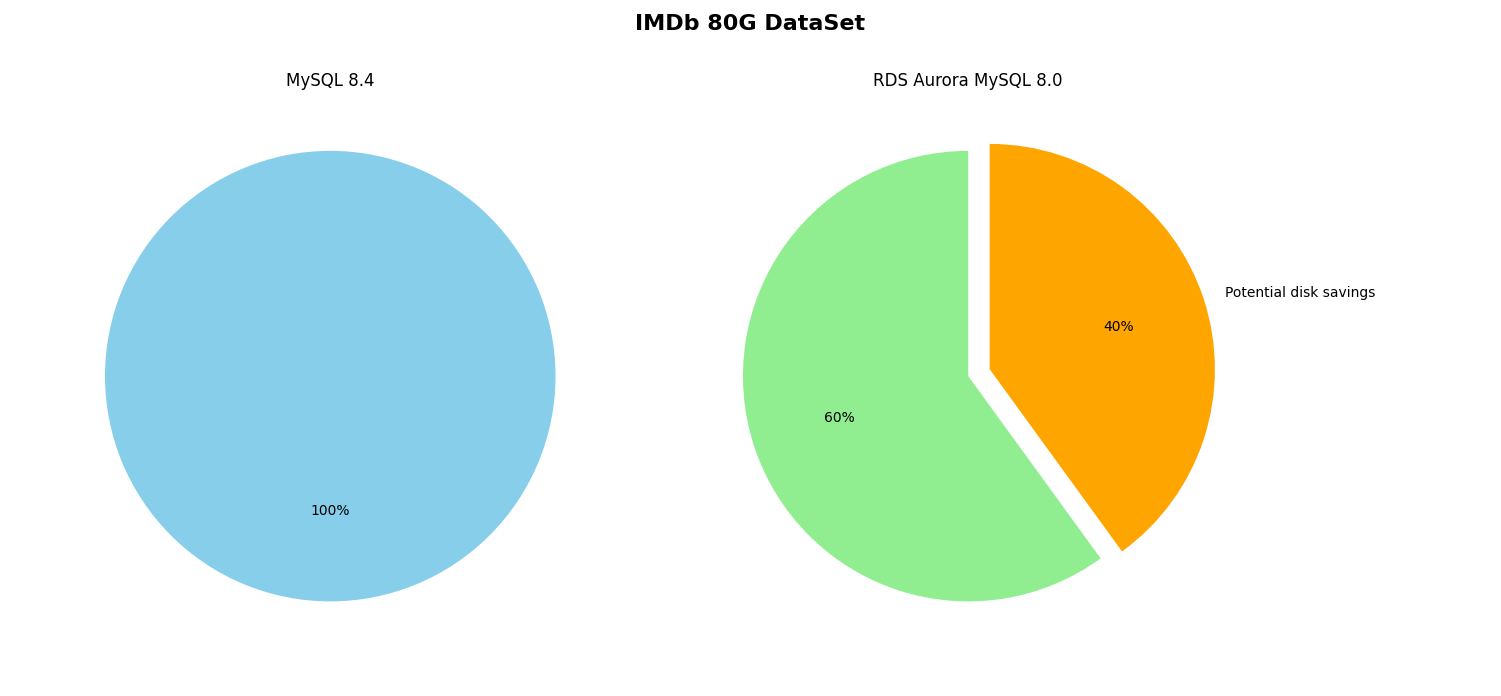
An Interesting Artifact with AWS RDS Aurora Storage
As part of using public datasets with my own Benchmarking Suite I wanted upsize a dataset for larger volume testing. I have always used the INFORMATION_SCHEMA.TABLES data_length and index_length columns as a sufficiently accurate measurement for actual disk space used.
Read more
Evaluating Readyset Caching for MySQL
Readyset is a database caching solution for MySQL and PostgreSQL . For applications that have increased load on your primary database, or use scale-out infrastructure to support a high-read workload, ReadySet can be a drop-in solution to address current performance issues.
Read more
Migrating off of WordPress - A Simplified Stack
The ongoing drama between Wordpress v WP Engine continues to cross my reading list, but I have permanently removed WordPress from my website. I have finally transitioned away from the complex Linux/Apache/MySQL/PHP (LAMP) stack required for self-hosting WordPress on my professional website.
Read more