For those that attended the MySQL Camp at Google HQ late last year you may have seen me with my own T-Shirt designs. A number of people inquired about getting them. I’ve finally got around to make them available online, so anybody that would like one can order online.
There are two different shirts. If you want your name on the shirt, you need to make sure you choose the correct one.
- Early Adopters – For those that were the first 48 that signed up, your name as well as position and company are on the shirt.
- The Herd – For everybody that registered on the website, your name is on the shirt.
Ok. I’ve already been asked why 48. This was the number of registrants when I got the shirt made back in Australia a week or so before the Camp.
There are also plenty more of my MySQL designs at my MySQL Wear Store .
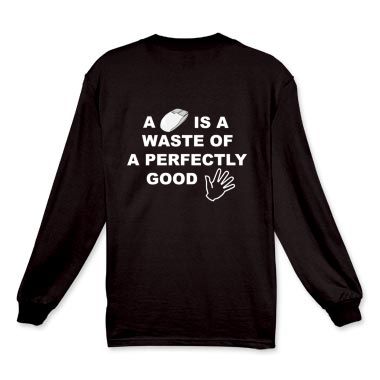 For those that also liked the runner up pin “A mouse is a waste of a perfectly good hand”, you can also get this in it’s original graphical shirt design at Geek Cool – CLI”