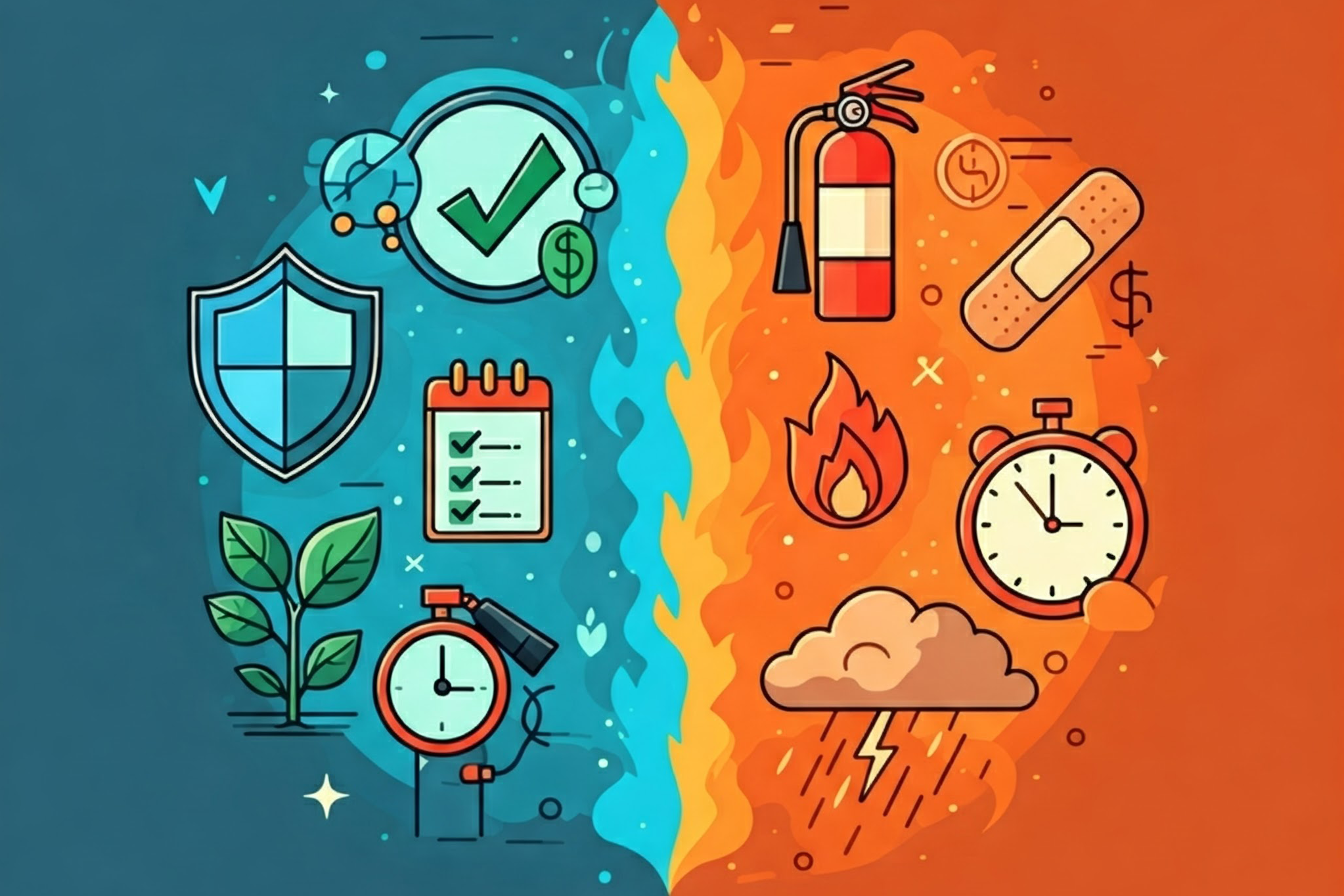
Many companies manage production infrastructure using a reactive model rather than a proactive one. Organizations typically react to warnings and alerts, then implement corrective actions in response. While some companies have well-designed architectural patterns—such as feature flags and rate limiting—that can quickly mitigate the impact of issues, these are merely temporary solutions, not resolutions.
There is an overwhelming number of monitoring and observability tools, with ever-increasing metrics populating dashboards. These tools all seek to identify situations that fall outside predefined boundaries, which relies on those boundaries being clearly defined in the first place. This is still a reactive model.
Instead of focusing on faster resolutions when problems arise, why not invest more in prevention?
Prequel is a new venture that aims to “Get ahead of software failure. Prevent incidents and be production-ready with community-driven problem detection.”
Their approach leverages the knowledge of the community regarding existing failures, risks, and problems, turning these insights into proactive steps for investment, helping to prevent avoidable situations before they occur. You can learn more about their proactive detection community at https://www.detect.sh/ .
It is exponentially more expensive (in terms of time, resources, cost, and complexity) to fix a problem in production than before production. This is especially true for new features, where it’s nearly impossible—without significant business risk—to retract a feature after it’s been released.
My product, Next BaseLine , is a preventive assessment framework for database migrations and version upgrades. We identify and prioritize risks at the beginning of the migration process to avoid potential compatibility, performance, and quality issues that could arise during or after implementation.
Read more about the Prequel “It’s time for problem detection! ” approach and their recent investment funding round .