Perl Tricks

perl_modules.pl

#!/usr/bin/perl

use ExtUtils::Installed;
my $instmod = ExtUtils::Installed->new();
foreach my $module ($instmod->modules()) {
my $version = $instmod->version($module) || "???";
       print "$module -- $versionn";
}

remove_perl_module.pl

#!/usr/bin/perl -w
use ExtUtils::Packlist;
use ExtUtils::Installed;

$ARGV[0] or die "Usage: $0 Module::Namen";

my $mod = $ARGV[0];

my $inst = ExtUtils::Installed->new();

    foreach my $item (sort($inst->files($mod))) {
             print "removing $itemn";
             unlink $item;
          }

     my $packfile = $inst->packlist($mod)->packlist_file();
          print "removing $packfilen";
          unlink $packfile;

http://www.cpan.org/misc/cpan-faq.html

Tagged with: Linux

Related Posts

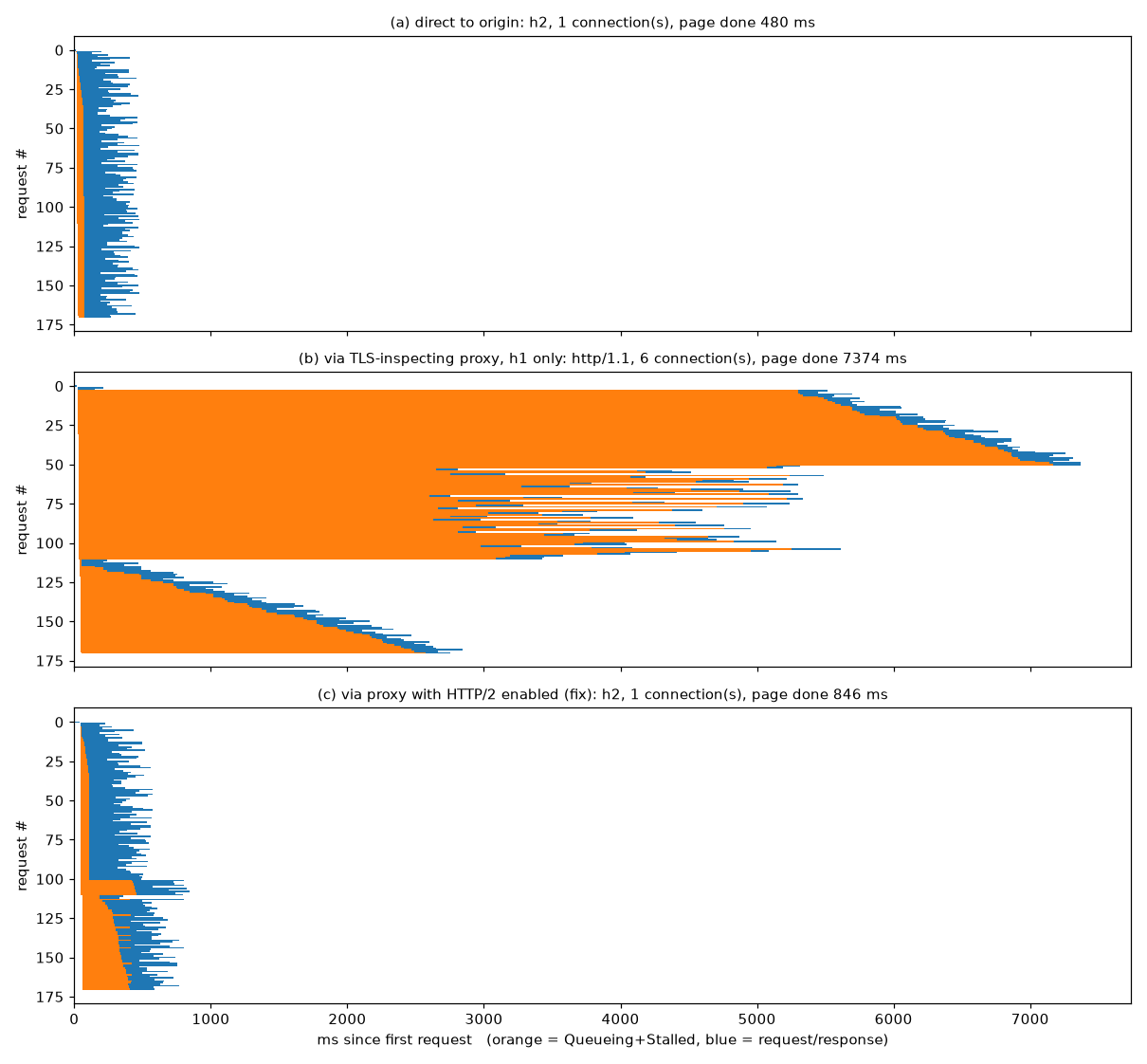
Six connections and a long queue: how a TLS-inspecting proxy quietly turned HTTP/2 into HTTP/1.1

I recently tracked down a performance problem that turned out not to be in the application, the servers, or the CDN. A corporate TLS-inspecting proxy sat between the users and the site.

Read more

How easy is it to use the VillageSQL MCP extension?

VillageSQL published Access MySQL over MCP with vsql-mcp . The extension serves the Model Context Protocol from inside the database, so an agent talks to MySQL over Streamable HTTP without a sidecar holding a credential.

Read more

Getting VECTOR capabilities in MySQL 8.4 using VillageSQL

For this quick verification of the 0.0.7 development branch of VillageSQL with the new vsql-vector plugin. Recreate the VillageSQL Percona Live presentation using MySQL version 8.4 and SVECTOR. Demonstrate a more detailed example using SVECTOR(1024) string embedded data.

Read more