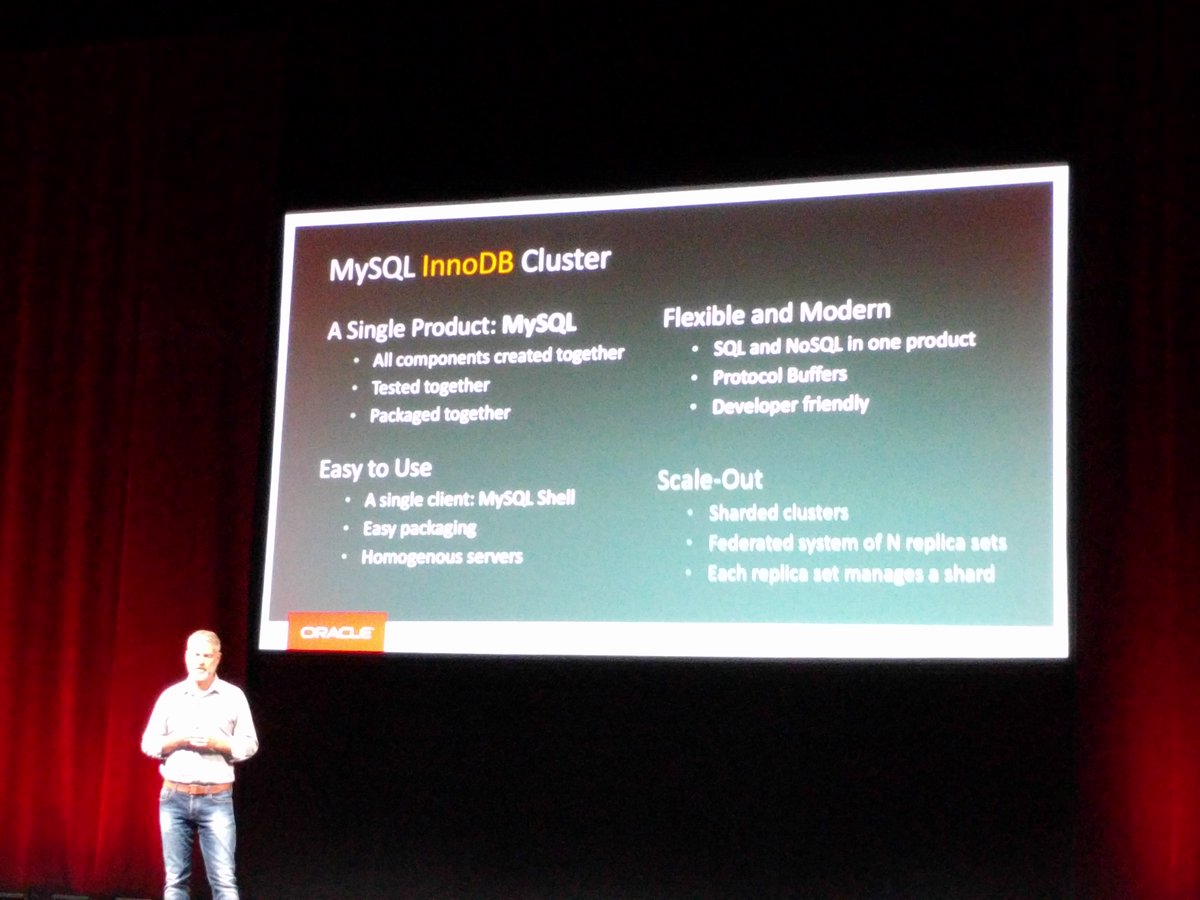
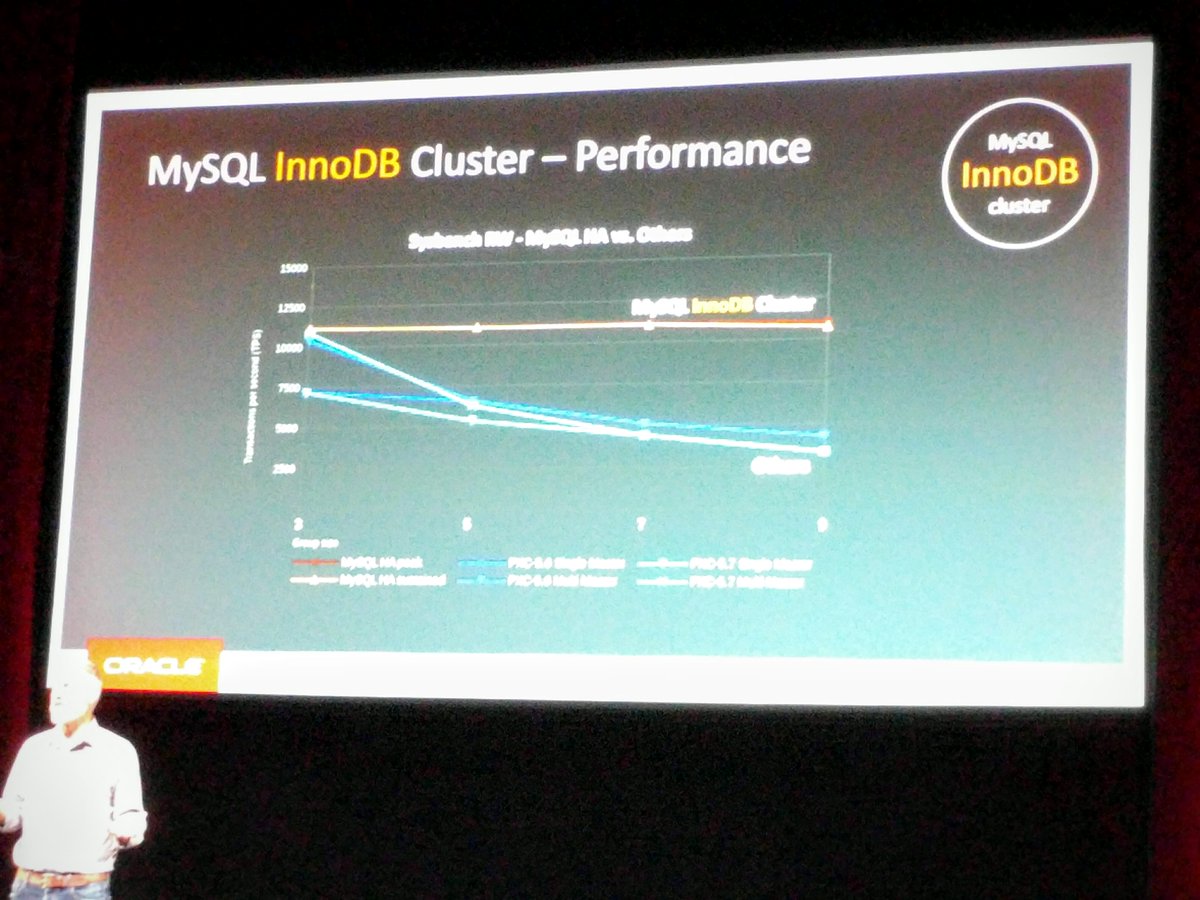
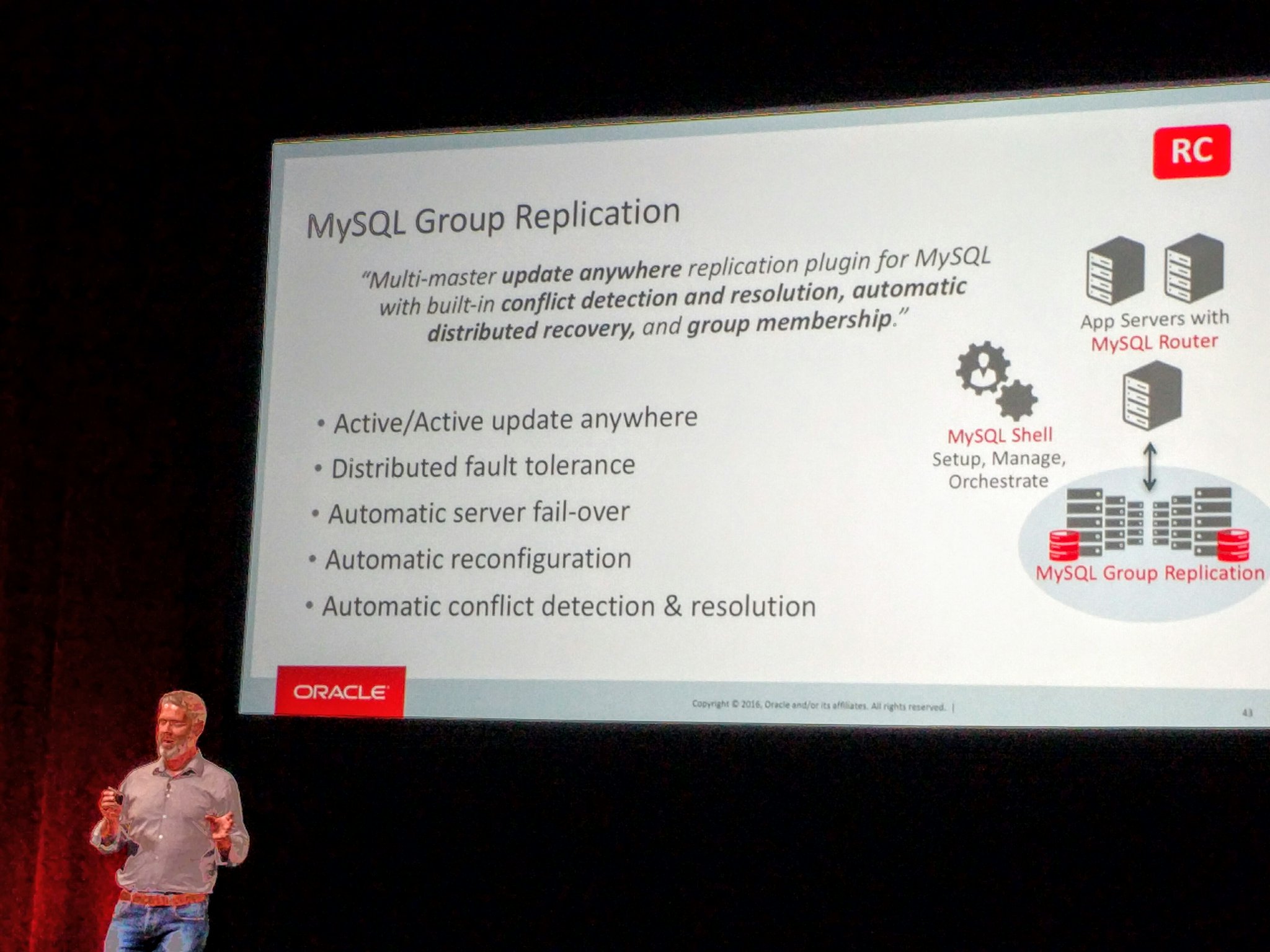
Tomas Ulin made a number of key announcements at this year’s State of the Dolphin and Customer Experiences keynote. MySQL Public Cloud, MySQL 8.0 DMR, MySQL InnoDB Cluster, MySQL Group Replication (RC). Some tweets and points of the keynote:
-
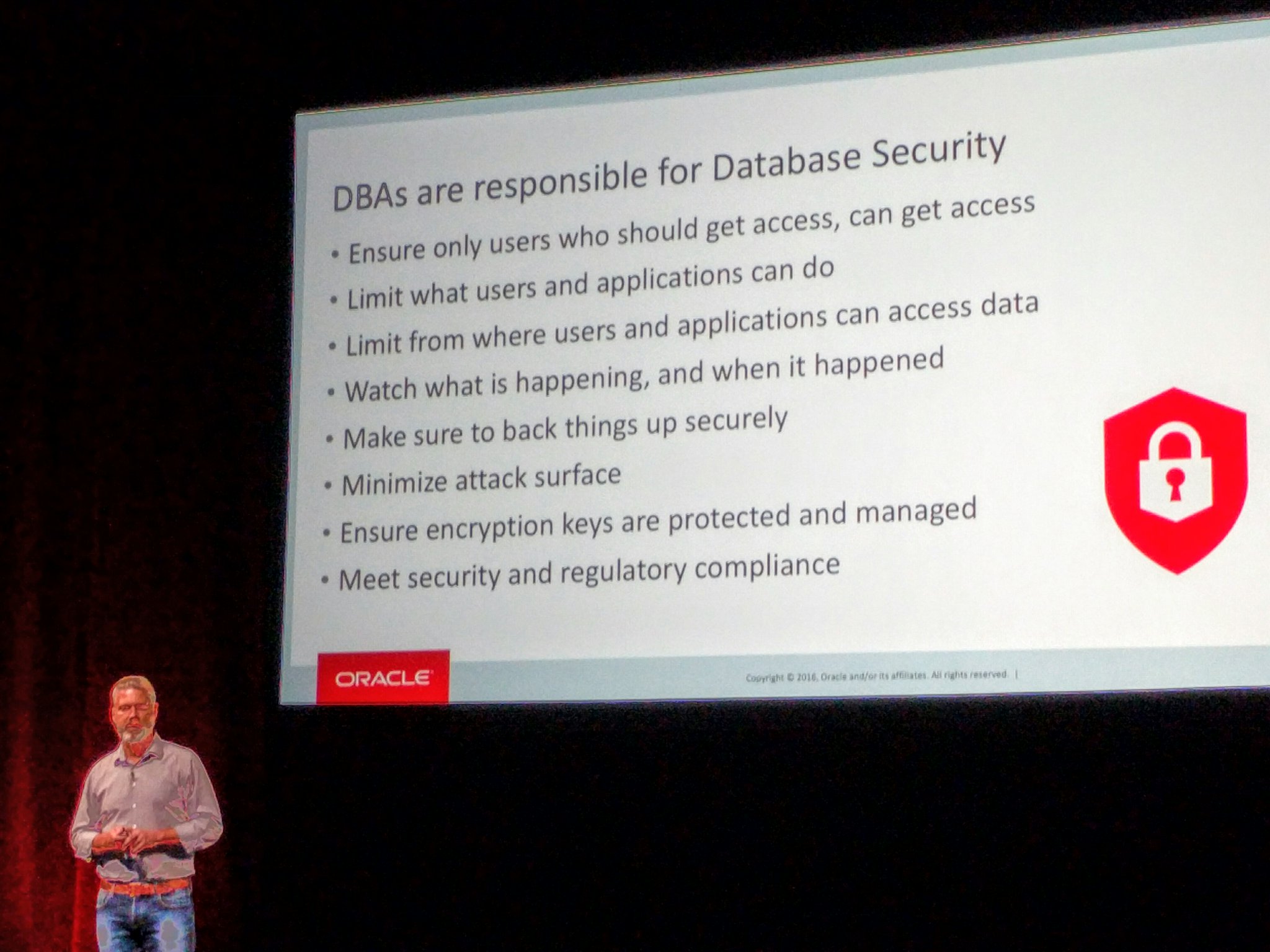
Tomas Ulin, VP of #MySQL engineering talks database security for modern applications. #oow16
-
MySQL as a hybrid database: Rock solid reliability + flexibility being a RDBMS and a NoSQL Solution
-
MySQL Enterprise Edition security covering authentication, encryption, firewall, auditing, backup and monitoring.
- MySQL Cluster 7.5 announcement, 128TB nodes, MySQL 5.7 features including JSON, generated columns.
- 20 years of constant improvements of MySQL as a relational database.
- MySQL is the #1 open source database for web-based applications. Used by 9 of the top 10 web sites.
Nicolai talked about how booking has evolved over the years starting with the traditional MySQL replication model, moving to a more complex sharded and partitioned architecture, and now a re-architecture towards a loosely coupled, write optimized and read optimized data model leveraging Redis queues. This work has enabled services to hide the complexity and need for developers to write SQL and leverage better data translation and interoperability, e.g. MySQL to Hadoop to MySQL. Booking.com is actively using MySQL 5.7, and is evaluating how to incorporate the new features of MySQL 8.0.
Andrew talked about how twinspires.com uses a multi data center master-master replication setup with MySQL 5.6 to manage critical availability needs for online wagering of horse races around the world. During peak times, load can increase 100x, similar to my own experiences handling 100x flash sales Improving performance – A full stack problem .
I have yet to discover how to deep link to this presentation at the OOW 2016 agenda to enable viewers to read the overview and speaker profiles.