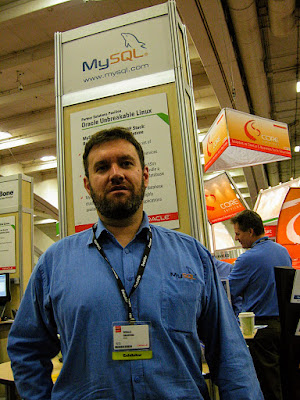
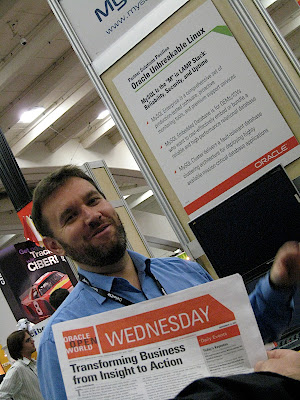
Yes, it may seem rather strange to the readers but MySQL has a booth at this week’s Oracle Open World 2007 and I’m here in San Francisco Wednesday and Thursday. If your in SF come in and say hi. Check out the Official Press Release and MySQL listed Oracle Resources for this conference.
An interesting recent report Oracle Users Indicate Increase in Use of Open Source sheds some light of the significance of MySQL within the Oracle Community.
The Independent Oracle Users Group (IOUG) has released its second major research study focusing on open source adoption trends, “Open Source in the Enterprise: New Software Disrupts the Technology Stack.” Conducted for the IOUG by Unisphere Research and sponsored by MySQL AB, the study builds on a similar report issued in mid-2006 covering open source adoption trends in the enterprise stack. The findings point to ongoing interest in open source software solutions for operating systems, databases and middleware with most organizations reporting that they intend to increase their use of open source in general over the coming year. However, open source applications remain less widely adopted.
For more information read the full report here.