Moving to using dash ‘-‘ as a delimiter

Spaces or tabs. Using 2 spaces verses 4 spaces. Defining variables as lowercase v InitCap, environment variables UPPERCASE or not, using underscore ‘_’ or dash ‘-‘ as a separator. These are all un-winnable discussions among your friends and colleagues. Side Note: What is critical for any business is there is a well-defined and enforced standard, no matter what that standard it.

I have while scripting in Bash always used underscore ‘_’, for commands or internal functions. I have probably taken on this because environment variables have IMO always used underscore, e.g. looking at my laptop now I have for example (TERM_PROGRAM, TEE_HOME, AWS_DEFAULT_REGION).

However in recent months I have changed my coding practices within scripting to always using the dash ‘-‘. What was list_clusters, became list-clusters for example.

Why? There is just one reason; the bane of millions of effective typists and coders; the QWERTY keyboard. The dash ‘-‘ requires the use of just one finger, while the underscore requires two.

Sometimes the simpler solution is well simpler.
Tagged with: Naming Standards Practices Programming Shell Scripting

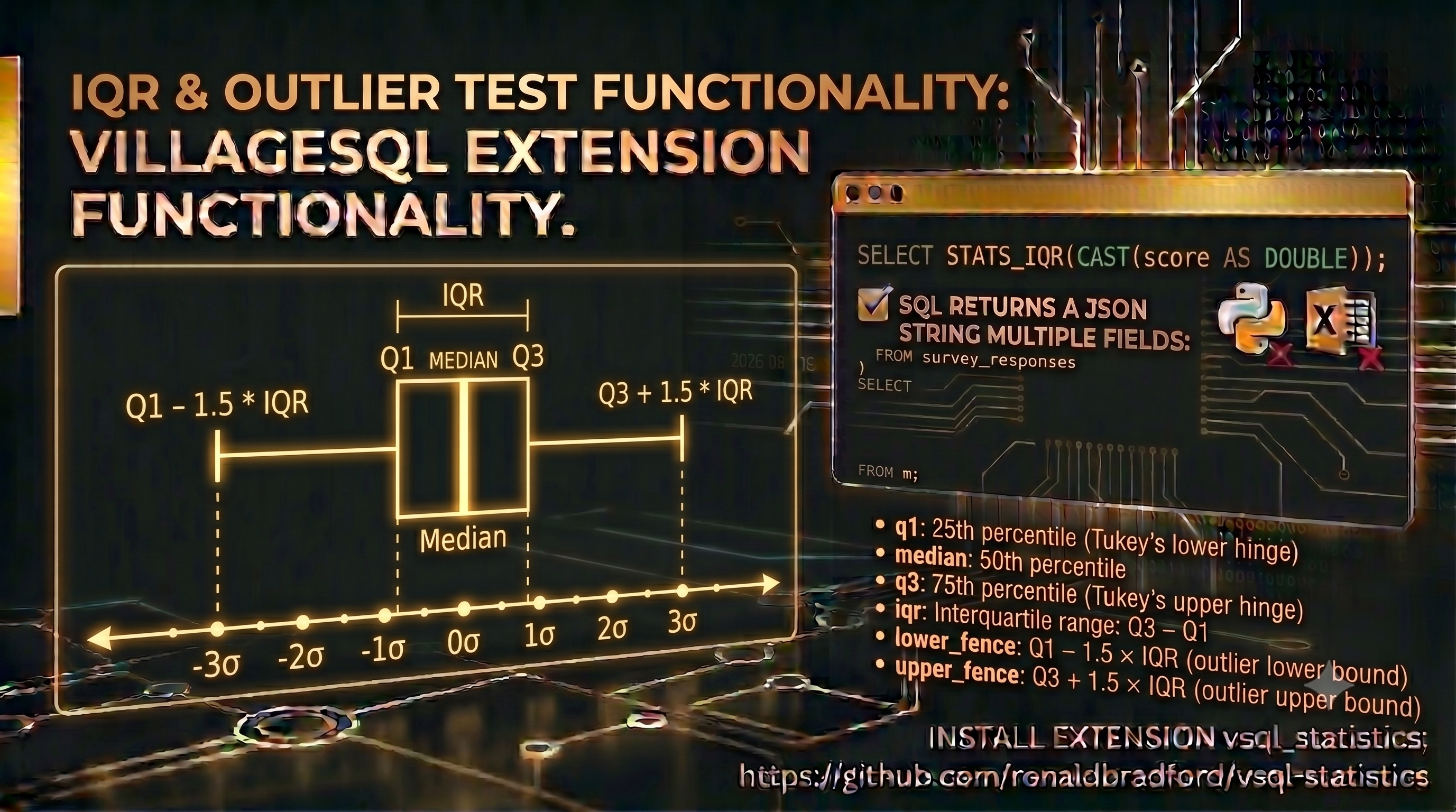
Producing IQR and Outlier statistics with SQL

The interquartile range (IQR) measures the spread of the middle 50% of a distribution — the distance between the first quartile (Q1) and the third quartile (Q3). Combined with Tukey’s 1.

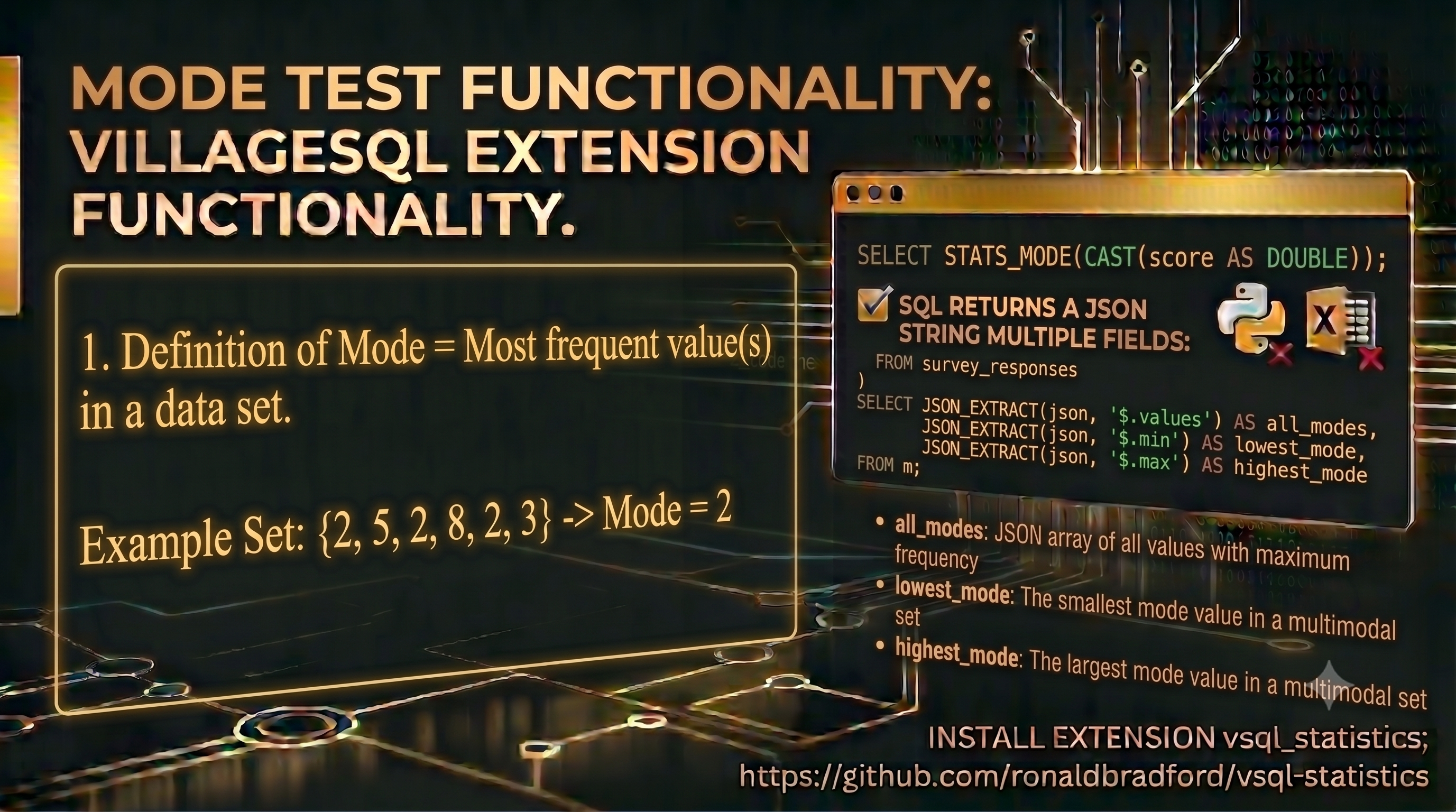
Producing Mode statistics with SQL

The mode is the value or values that appear most frequently in a dataset. Unlike the mean or median, it applies naturally to categorical and ordinal data — star ratings, product codes, survey responses — and reveals what is most common, not what is average.

Extending MySQL Capabilies with UDFs, Plugins and Components - Part 2

MySQL offers three different approaches to extending the SQL capabilities with the default product you download and install. These are: User Defined Function (UDF) MySQL Manual MySQL Plugin MySQL Manual MySQL Component MySQL Manual In my prior post I provided a new uuidv function that accepted a numeric argument to return a string of the version of UUID specified.