A change in the MySQL Binary distributions

Yesterday was the surprise announcement of MySQL 5.4 at the 2009 MySQL Conference and Expo. It was unfortunate that the supporting information was not that forthcoming on the MySQL website. I tried for several hours to try and download, but no mirrors were initially available. Today I see some information on the mysql.com home page and finally able to get the binary.

What I found most significant with this new major version release is a change in the binary distribution, as seen on the Download page .

MySQL 5.4 is only available on 3 platforms:

  • Linux (AMD64 / Intel EM64T)
  • Solaris 10 (SPARC, 64-bit)
  • Solaris 10 (AMD64 / Intel EM64T, 64-bit)

I was also surprised that this beta release highlights the emphasis of community contributions (long overdue), yet the community and indeed many employees of Sun/MySQL were simply unaware of this work. This is clearly a change in involving the community. While I applaud the beta status, hopefully a more stable product to start with, it’s development was done in a very closed company model.
Tagged with: Conferences Databases General MySQL MySQL User Conferences MySQL Users Conference 2009 Sun

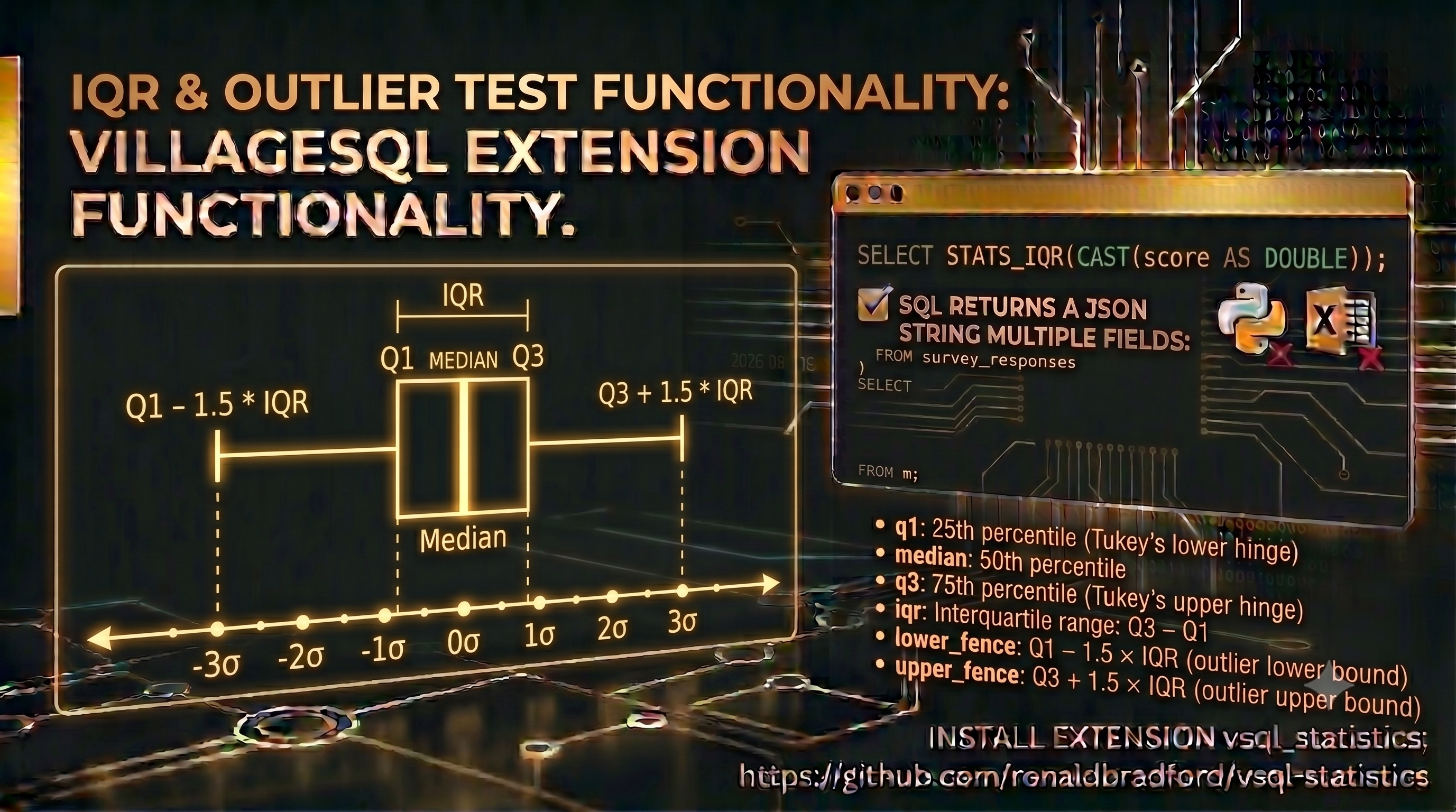
Producing IQR and Outlier statistics with SQL

The interquartile range (IQR) measures the spread of the middle 50% of a distribution — the distance between the first quartile (Q1) and the third quartile (Q3). Combined with Tukey’s 1.

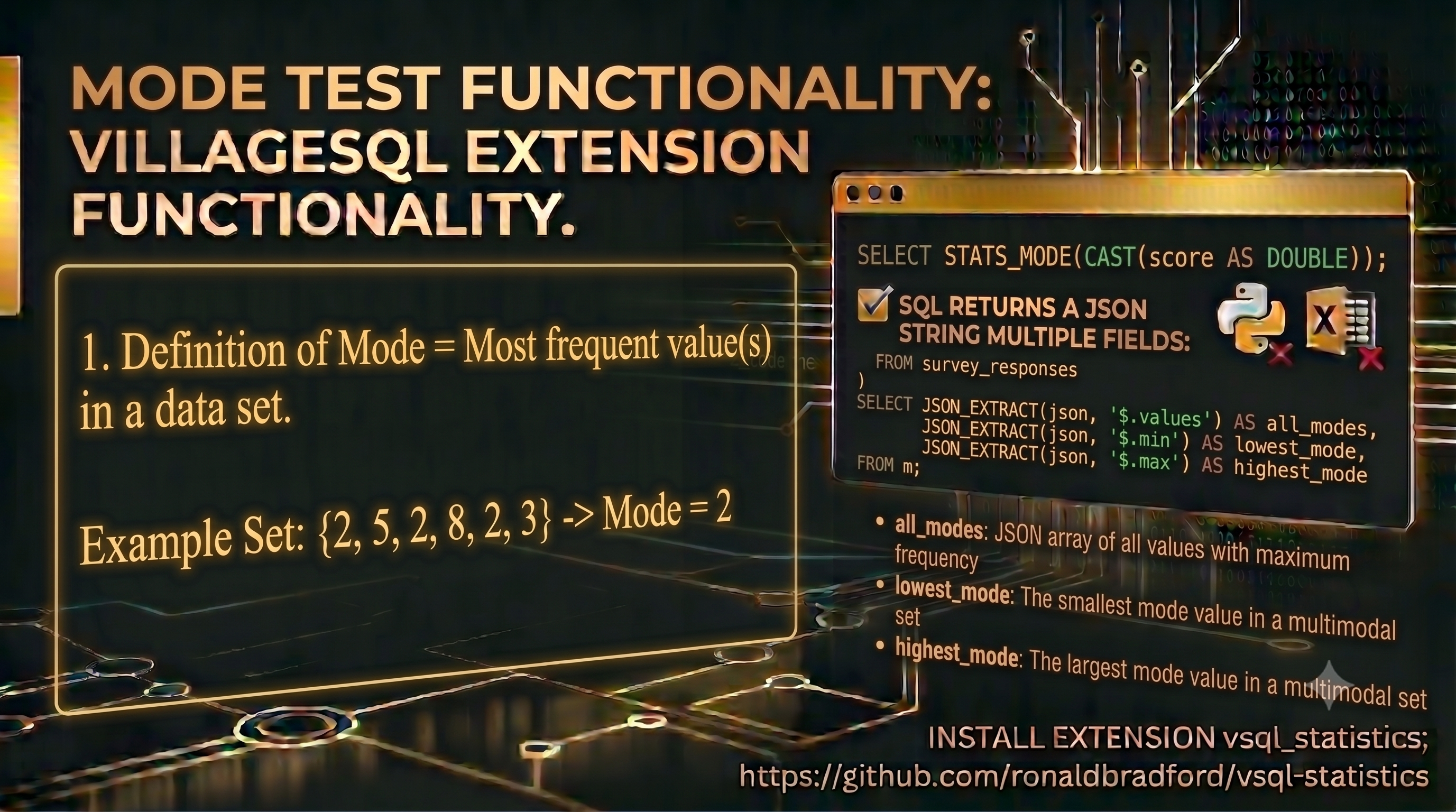
Producing Mode statistics with SQL

The mode is the value or values that appear most frequently in a dataset. Unlike the mean or median, it applies naturally to categorical and ordinal data — star ratings, product codes, survey responses — and reveals what is most common, not what is average.

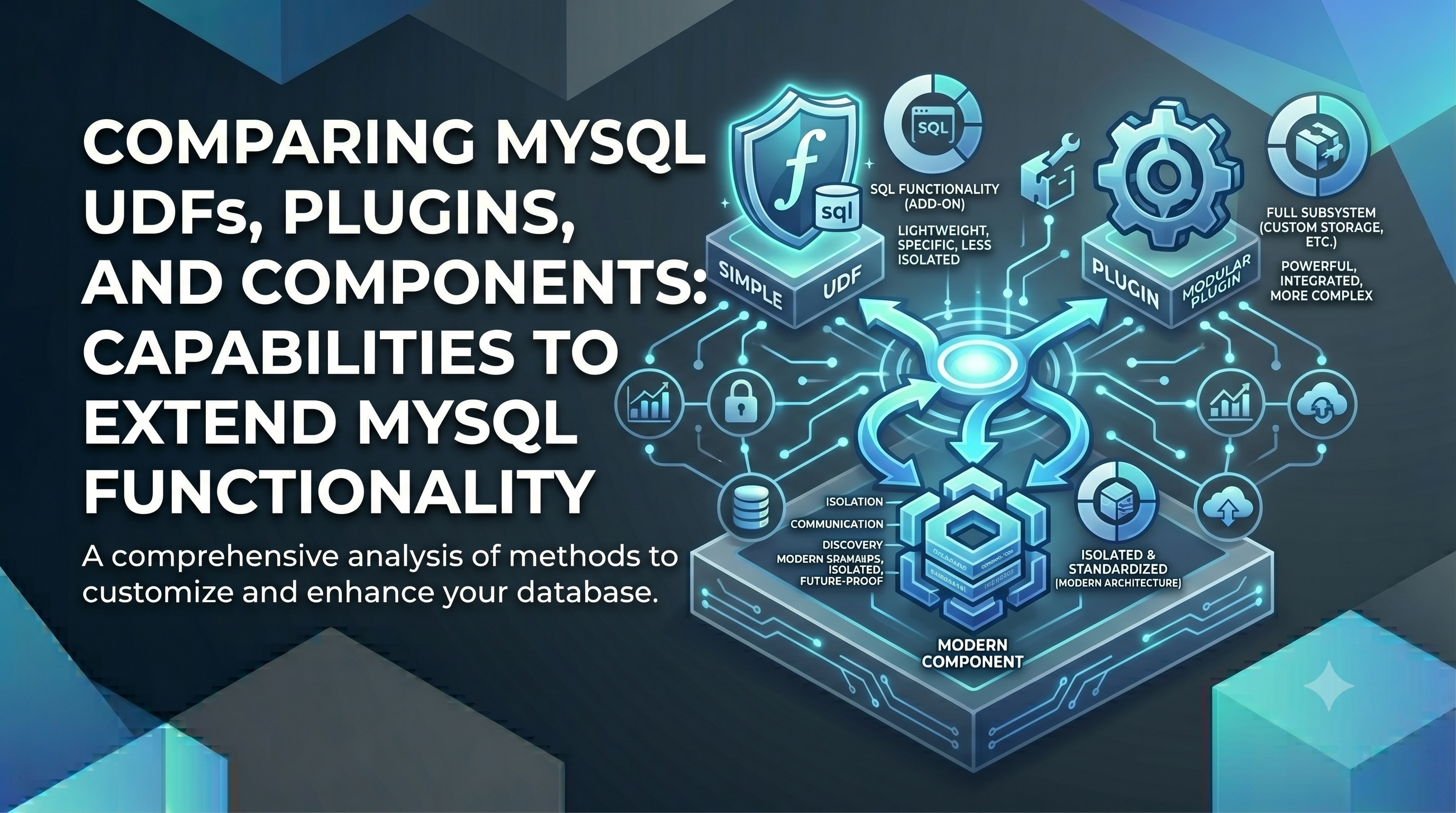
Extending MySQL Capabilies with UDFs, Plugins and Components - Part 2

MySQL offers three different approaches to extending the SQL capabilities with the default product you download and install. These are: User Defined Function (UDF) MySQL Manual MySQL Plugin MySQL Manual MySQL Component MySQL Manual In my prior post I provided a new uuidv function that accepted a numeric argument to return a string of the version of UUID specified.