In the past week I’ve added some more reading to my list, extended the library and hammered the credit card. Some of this has been in part to keep abreast of things as a result of being quizzed in job interviews.
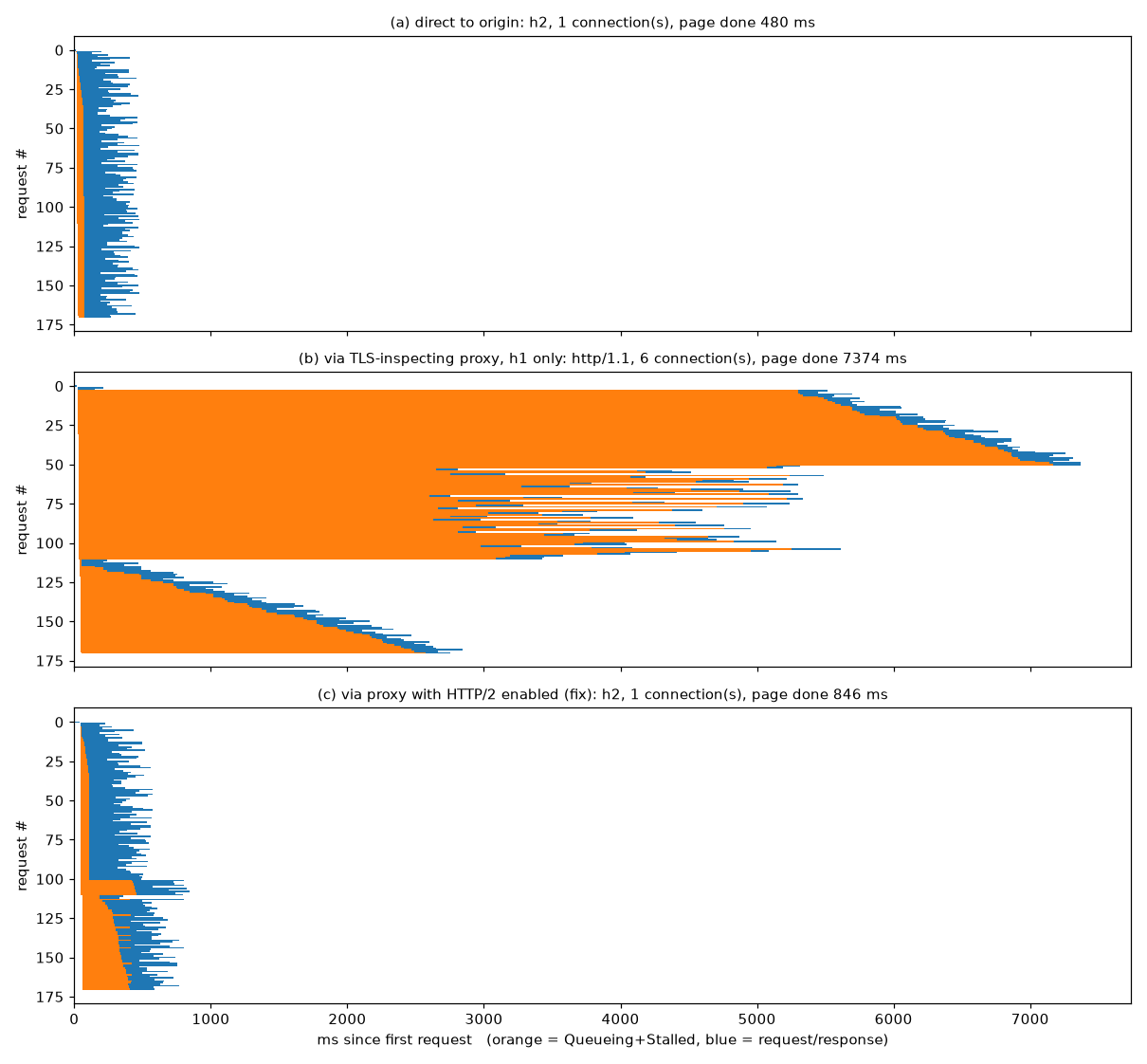
I recently tracked down a performance problem that turned out not to be in the application, the servers, or the CDN. A corporate TLS-inspecting proxy sat between the users and the site.
VillageSQL published Access MySQL over MCP with vsql-mcp . The extension serves the Model Context Protocol from inside the database, so an agent talks to MySQL over Streamable HTTP without a sidecar holding a credential.
For this quick verification of the 0.0.7 development branch of VillageSQL with the new vsql-vector plugin.
Recreate the VillageSQL Percona Live presentation using MySQL version 8.4 and SVECTOR. Demonstrate a more detailed example using SVECTOR(1024) string embedded data.