Reading the MySQL Manual

I was asked the question today, “How do I show the details of a Stored Procedure in MySQL. The SHOW PROCEDURE ‘name’ didn’t work.”.

The obvious answer was SELECT ROUTINE_NAME,ROUTINE_DEFINITION FROM INFORMATION_SCHEMA.ROUTINES, given I like to use the INFORMATION_SCHEMA whenever possible. This lead me to think was is the corresponding SHOW command. A quick manual search got me to SHOW CREATE PROCEDURE .

What was interesting was not this, but the list of other SHOW commands I didn’t know. I did not know about SHOW MUTEX STATUS , SHOW OPEN TABLES and SHOW PROCEDURE CODE for example.

It pays if you have free time (who ever has that), to re-read the manual, or at least a detailed index regularly. I’m sure there are plenty more helpful tips out there. Now just what does the output of these new commands really do, and does it really help. If only I could get commands to the stuff I really want.
Tagged with: Databases General MySQL

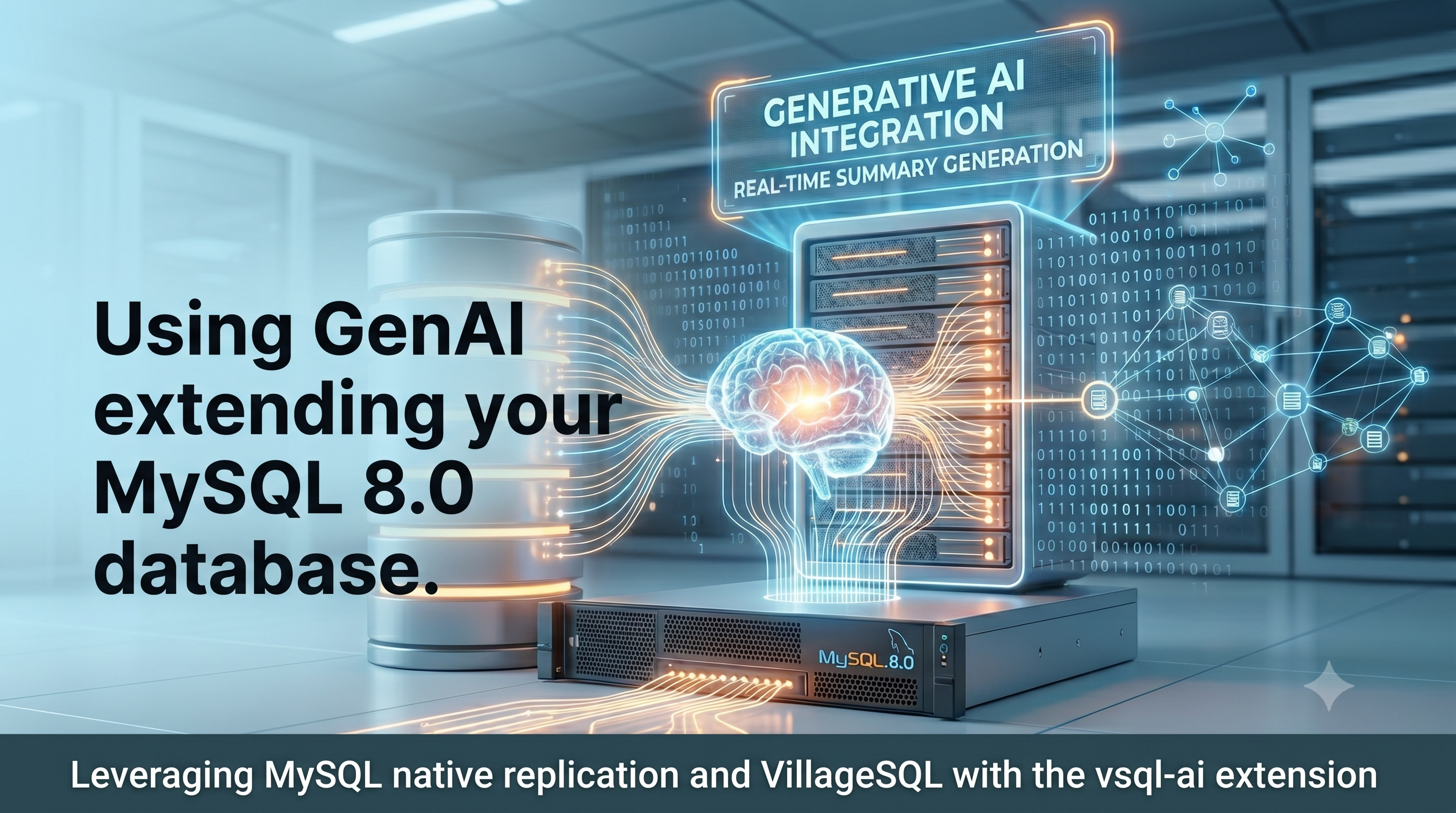
Using GenAI directly in the database. A practical example using MySQL 8.0

If you have a typical MySQL production setup using MySQL 8.0 (EOL) with replication, you can take advantage of VillageSQL extensions to generate AI responses directly with your source data with no impact on your production setup or existing application software.

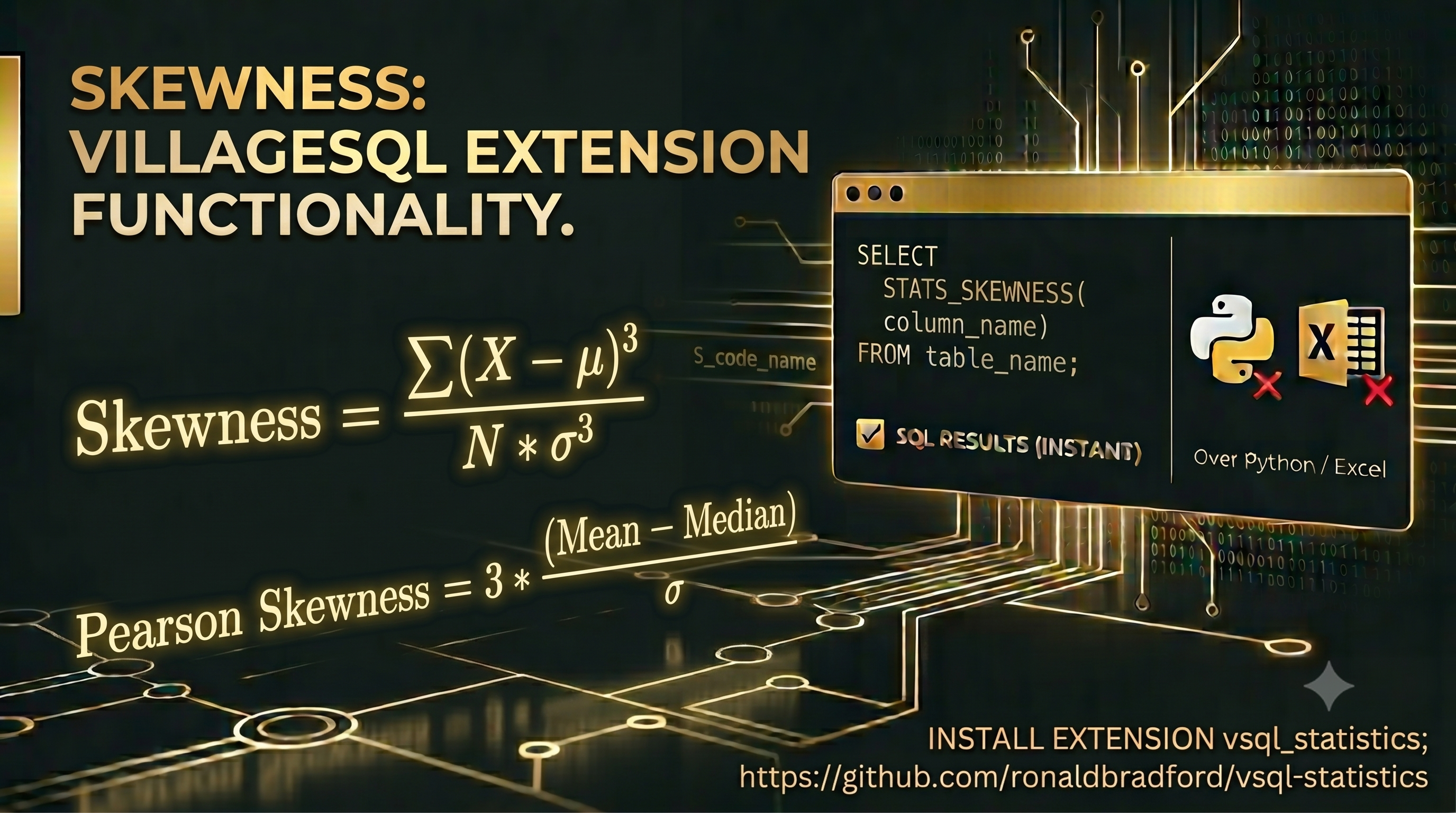
Producing Skewness statistics with SQL

Skewness measures the asymmetry of a distribution. A perfectly symmetric distribution has a skewness of zero. A positive skew (right-skewed) means the tail extends to the right — a small number of high values pull the mean above the median.

Exploring the vsql-ai extension

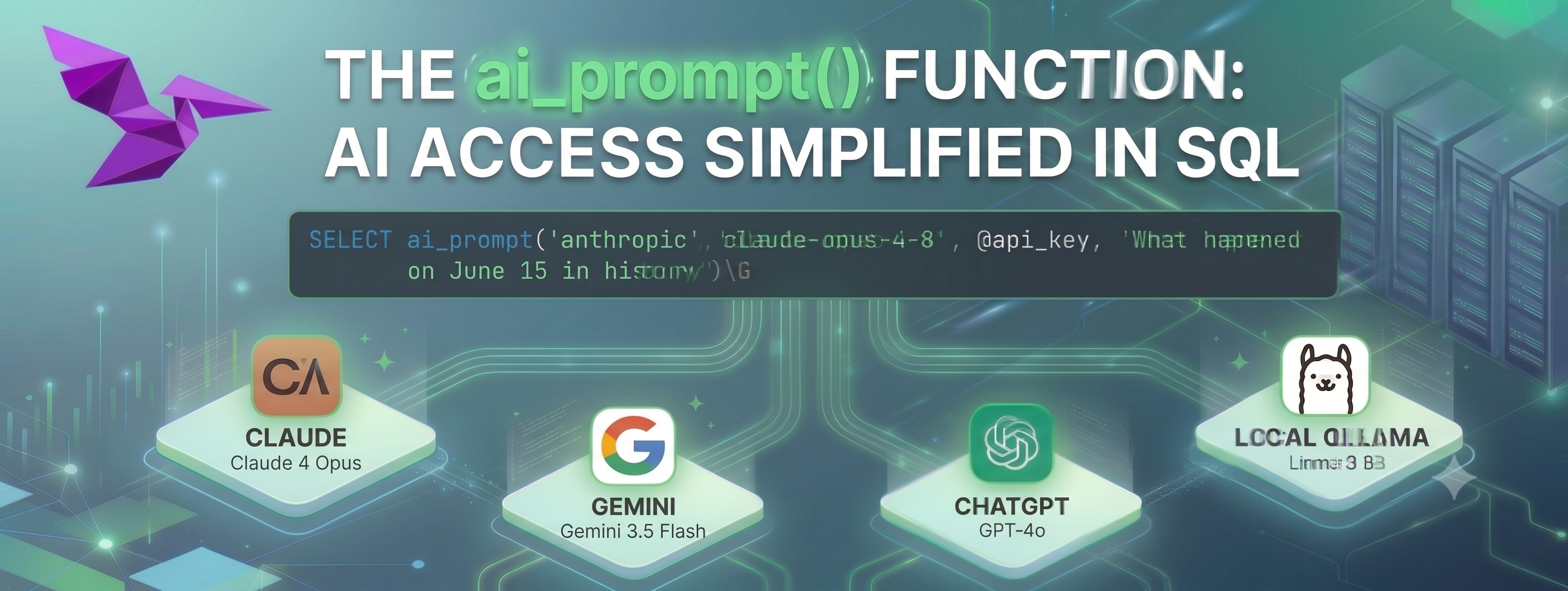
The vsql-ai extension adds AI prompt capabilities and text embeddings directly in SQL queries, with support for Anthropic Claude , Google Gemini , OpenAI ChatGPT , or a local LLM such as Ollama .